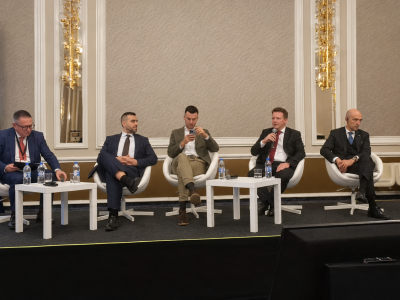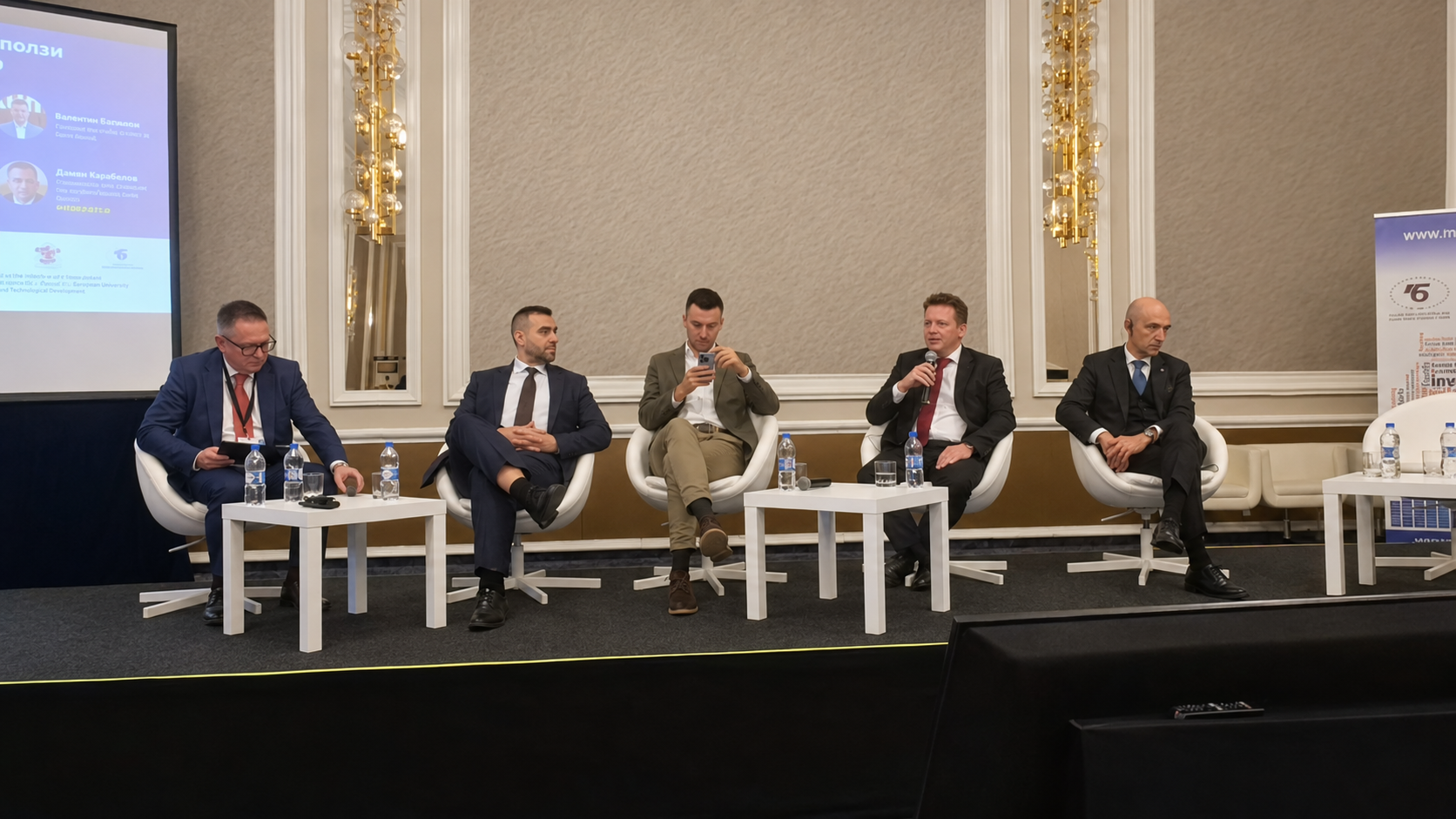
HBCB Vice Chairman Vasilis Satslis highlights the long-term contribution of Greek businesses to Bulgaria’s economy, while the forum presents financing opportunities for SMEs and the strategic priorities of the next EU funding period.
On 5 November 2026, the seventh edition of Sofia International Money Expo (SIM Expo 2026) brought together more than 120 representatives of businesses, public institutions, international financial organisations and the investment community at Sofia Balkan Palace Hotel.
Held under the motto “Sofia – A Regional Financial Hub”, the conference addressed one of the most important challenges facing businesses: securing appropriate financing for sustainable growth, innovation, technological modernisation and international expansion.
Organised by the Bulgarian Chamber of Commerce and Industry (BCCI), its Investment Council and the Bulgarian Small and Medium Enterprises Promotion Agency (BSMEPA), in partnership with Sofia Municipality, the event provided a platform for dialogue between financial institutions, investors and entrepreneurs.
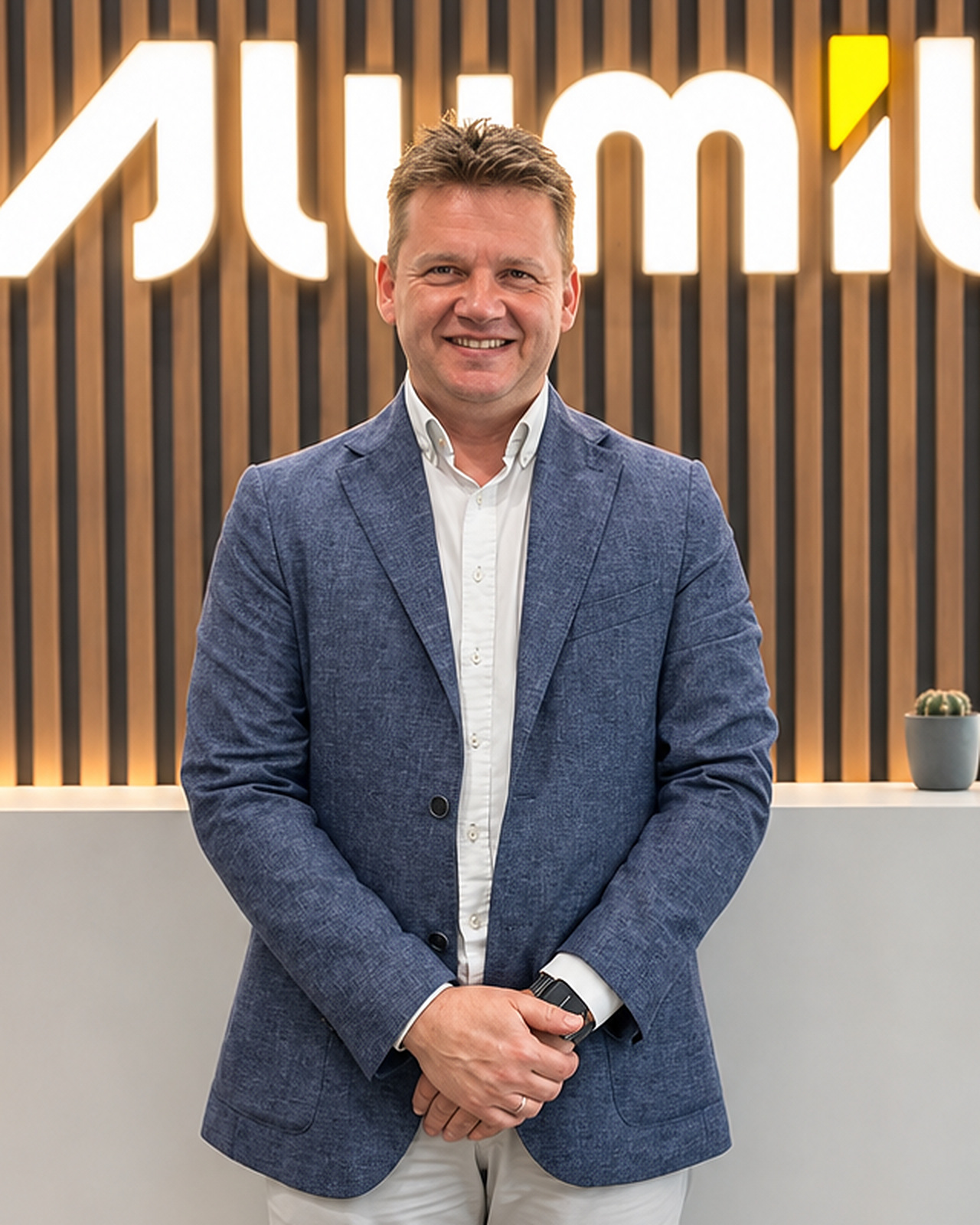
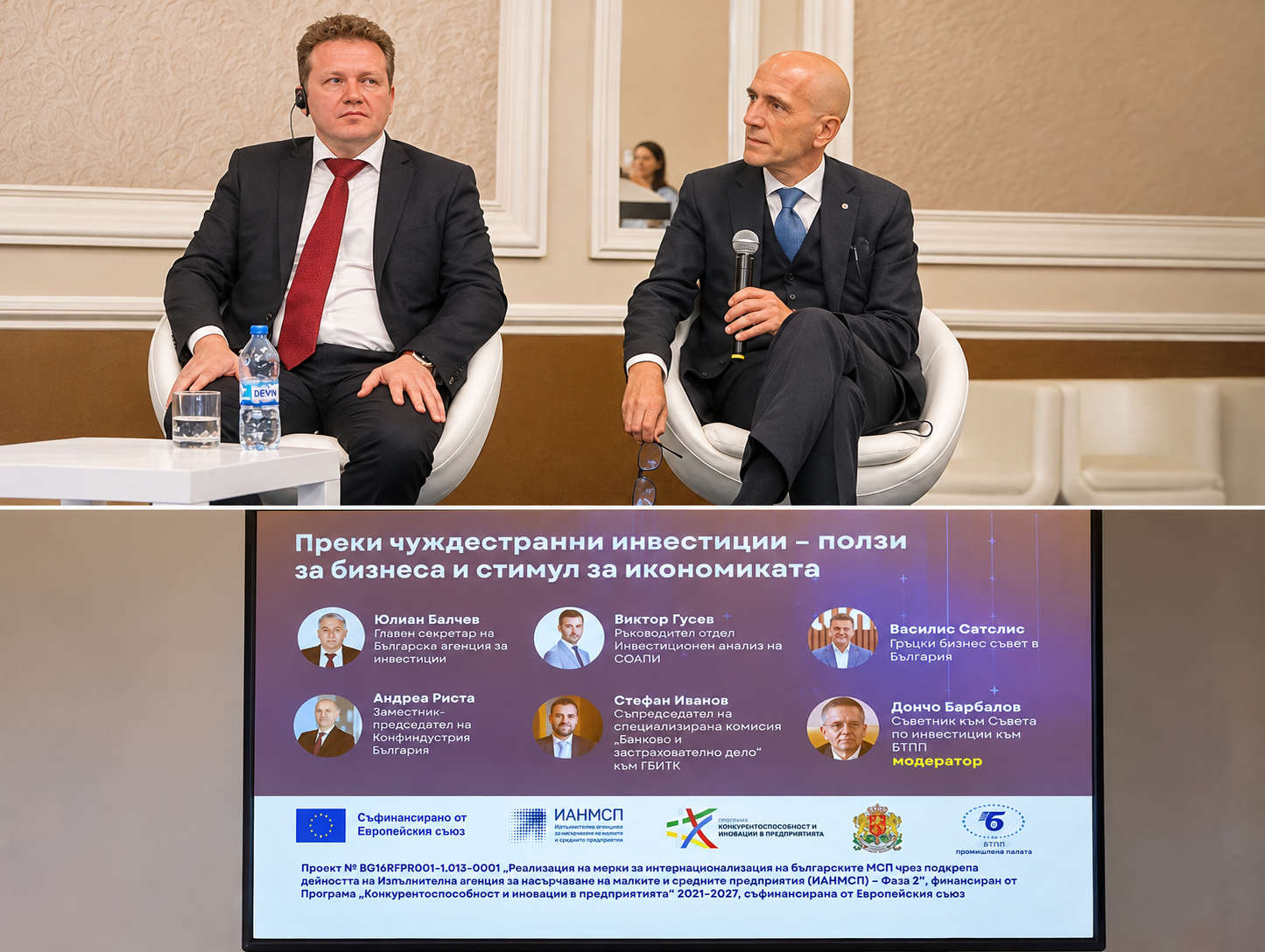
The Hellenic Business Council in Bulgaria (HBCB) was represented by its Vice Chairman, Vasilis Satslis, who participated in the discussion on Foreign Direct Investment – Benefits for Business and a Driver of Economic Growth, moderated by Doncho Barbalov.
His contribution highlighted the substantial economic footprint of Greek companies in Bulgaria, the importance of a stable and predictable business environment, and the opportunities emerging in sectors with significant long-term growth potential.
Greek Investment in Bulgaria: A Long-Term Commitment
Greek companies have played a significant role in Bulgaria’s economic development for nearly three decades, building relationships that extend far beyond geographical proximity and favourable initial operating costs.
Drawing on the experience of ALUMIL, which established its presence in Bulgaria in 1998, Vasilis Satslis explained how the motivations behind Greek investment have evolved.
Initially, Bulgaria offered a comparatively attractive cost environment and considerable growth potential. Over time, however, Greek companies increasingly developed substantial local operations, investing in production facilities, buildings, technological equipment, skilled employees and long-term business partnerships.
Despite rising labour, energy and operational costs, many businesses have continued expanding their activities, demonstrating confidence in Bulgaria’s economic potential.
An important element of Satslis’s presentation was the contribution of the wider Greek business community to the Bulgarian economy.
According to an analysis conducted by ICAP CRIF for the Hellenic Business Council in Bulgaria, over the past four years HBCB has brought together 154 companies, representing 43 sectors of the Bulgarian economy.
Based on the latest available annual financial data, these companies collectively account for approximately €5.20 billion in annual turnover, €5.98 billion in total assets and 27,412 employees.
These figures illustrate the substantial economic footprint of the business community associated with HBCB and its contribution to Bulgaria’s economic development and bilateral economic cooperation.
The four-year period refers to the scope of the membership analysis, rather than cumulative financial results over four years. The figures represent the latest available annual company data.
Beyond the largest investors, Satslis underlined the importance of medium-sized enterprises, which contribute to employment, supply chains, specialised services and cross-border economic cooperation.
This reinforces an essential message: foreign investment should not be measured solely through initial capital inflows. Its longer-term contribution also includes employment, technology transfer, supplier development and the creation of sustainable business ecosystems.
Competitiveness Depends on Stability and Predictable Costs
A central theme of Satslis’s intervention was the importance of a stable operating environment, particularly for manufacturing companies.
Energy prices, raw-material costs and changing market conditions directly influence production planning, profitability and investment decisions.
Speaking from the perspective of the aluminium industry, Satslis stressed that electricity costs are among the most significant factors affecting manufacturing competitiveness.
Although aluminium prices had shown some signs of easing following earlier increases, the broader volatility of energy and production costs remained a concern.
He also noted emerging signs of moderation in construction-related activity and contracts, suggesting that manufacturers and suppliers should remain attentive to changing market demand.
While such pressures do not affect all industries equally, their implications can be particularly significant for industrial businesses with energy-intensive production processes.
The underlying message was clear: maintaining Bulgaria’s attractiveness to international investors increasingly requires more than competitive operating costs. It also depends on regulatory consistency, reliable infrastructure, a predictable economic environment and confidence in long-term investment conditions.
New Investment Opportunities: Technology, Logistics and Renewable Energy
Despite these challenges, Bulgaria continues to offer promising opportunities for both established international investors and companies considering market entry.
Satslis identified several sectors attracting growing interest, including technology, digital services, logistics parks and renewable energy.
These developments reflect a broader transformation in investment patterns, as companies increasingly seek markets capable of supporting technological development, efficient supply chains and sustainable industrial growth.
The expansion of digital services and technology-related activities creates opportunities for software providers, technology integrators, consulting companies and specialised service businesses.
Investment in logistics facilities and transport infrastructure can benefit manufacturers, distributors, construction companies and businesses engaged in international trade.
Meanwhile, the renewable energy sector presents opportunities related to generation capacity, energy efficiency, storage solutions, engineering and industrial decarbonisation.
Satslis also drew attention to the developing two-way nature of investment relations between Bulgaria and Greece.
While Greek companies have maintained a substantial presence in Bulgaria for many years, Bulgarian investment interest in Greece has also been increasing. Although real estate remains an important area of activity, broader business investment is gradually gaining momentum.
This creates additional possibilities for bilateral partnerships, market expansion and collaboration between companies operating in the two countries.
Financing Business Growth: What SIM Expo 2026 Presented
Beyond the discussion on foreign investment, SIM Expo 2026 provided important information on financing solutions available to Bulgarian enterprises.
The programme examined institutional support for business development, equity investment, financial and guarantee instruments, European funding programmes and the role of foreign direct investment.
Particular attention was given to how companies can combine different sources of financing to implement projects that might otherwise be difficult to realise through conventional bank lending alone.
More than €1.6 Billion Managed by Bulgaria’s Fund of Funds
One of the most significant presentations came from Alexander Georgiev, Executive Director of Bulgaria’s Fund of Funds, during the panel on institutional support for business development, moderated by Liliana Pavlova, former Vice President of the European Investment Bank.
According to the information presented, the Fund of Funds manages more than €1.6 billion under seven programmes for the 2021–2027 programming period.
Of this amount, nearly €600 million has already been made accessible to the market through financial instruments supporting projects in several important areas.
These include energy and resource efficiency, circular economy solutions, urban development, technology transfer, entrepreneurship, innovation, digitalisation and dual-use products and services.
The available resource creates potential opportunities for businesses seeking to modernise production processes, introduce new technologies, improve efficiency, expand operations or develop innovative products.
The presentation also highlighted the contribution of financial instruments during the previous programming period, 2014–2020, when approximately €500 million in public resources helped mobilise a comparable amount of private investment, supporting more than 3,500 final recipients.
Another important aspect of the current funding framework is its regional dimension. More than 50% of the relevant resource is intended for investment outside Bulgaria’s South-West region, contributing to more balanced economic development.
Combining Loans, Guarantees and Grants
A particularly useful development for businesses is the possibility of combining financial instruments with grant support within a single operation.
Depending on the specific programme, companies may be able to access financing through participating banks, investment fund managers or other financial intermediaries, with certain products integrating a grant component.
Such support can take different forms, including technical assistance, investment grants or capital rebates.
This approach can simplify the application process and improve the overall financial structure of investment projects.
Combined financing is particularly relevant for projects involving circular economy solutions, digitalisation, urban development and technology transfer, subject to the conditions of each financial instrument.
For SMEs, the significance is considerable: rather than relying exclusively on traditional loans or waiting for grant-only calls, businesses can explore financing structures suited to their investment needs, cash flow and development stage.
Equity Financing and Support for Scaling Businesses
The conference also explored the role of equity investment and venture capital in supporting business expansion.
For innovative enterprises, start-ups and growing companies, equity financing can provide an alternative to conventional borrowing.
Beyond capital itself, investment partners can contribute strategic expertise, business networks, market access and support for international expansion.
For established SMEs, the most appropriate financing model will depend on the maturity of the company, the nature of its project and its willingness to share ownership or take on debt.
The wider financing landscape discussed at SIM Expo demonstrates the importance of matching each investment project with the right combination of instruments, rather than treating grants, loans and equity financing as interchangeable solutions.
Looking Ahead: EU Funding Priorities for 2028–2034
The conference took place at an important moment for the future of European financing.
On 4 November 2026, Bulgaria officially initiated the preparation and programming process for the next EU financial period, covering 2028–2034.
The European Commission has proposed a new Multiannual Financial Framework amounting to almost €2 trillion across the European Union.
The proposal places stronger emphasis on competitiveness, research and innovation, digital transformation, industrial decarbonisation, security and strategic economic resilience.
A central element is the proposed European Competitiveness Fund, intended to support strategic sectors such as advanced digital technologies, artificial intelligence, cybersecurity, clean technologies, industrial transformation, biotechnology, healthcare, defence and space.
The proposed framework also aims to simplify access to EU financing and improve coordination between public funding and private investment.
For companies operating in Bulgaria, these priorities provide an early indication of the areas likely to receive increased attention in future European investment policies.
Manufacturers considering energy-efficient technologies, technology businesses developing innovative solutions, companies investing in cybersecurity and enterprises pursuing international growth may find these strategic directions particularly relevant.
Importantly, the 2028–2034 budget and its programmes remain subject to the EU legislative and negotiation process. The proposed priorities should therefore be viewed as guidance for long-term business planning, not as confirmation of currently available funding calls or guaranteed allocations to Bulgaria.
Nevertheless, early preparation can help businesses position themselves for future opportunities by developing investment concepts, establishing partnerships and identifying technological and operational priorities.
What HBCB Member Companies Should Consider
The discussions at SIM Expo 2026 offer several practical conclusions for companies of different sizes and sectors.
Businesses planning investments in the near term should examine the financial instruments available under the current 2021–2027 programming period, particularly those supporting digitalisation, energy efficiency, technological modernisation and innovation.
Companies should also assess whether loans, guarantee-backed products, equity investment or combined grant-and-financial-instrument structures are most appropriate for their projects.
Enterprises considering medium- and long-term investments can begin preparing for the emerging priorities of the 2028–2034 EU programming period. Developing technically sound projects, identifying potential partners and evaluating financing requirements early may provide an advantage when future programmes become operational.
For manufacturers, the stability of energy costs and access to competitive infrastructure will remain essential considerations.
Technology providers, engineering companies, consultants, logistics businesses and renewable energy developers may also benefit from the investment trends identified during the conference.
HBCB encourages its members to consult official sources and participating financial intermediaries for up-to-date information on eligibility, application procedures and the operational status of specific instruments.
Businesses can explore the Fund of Funds’ active financial instruments, consult its financial intermediaries, and follow the European Commission’s proposals for the 2028–2034 EU budget.
Strengthening Greek-Bulgarian Economic Cooperation
SIM Expo 2026 reaffirmed the importance of cooperation between public institutions, financial organisations and the private sector in turning investment potential into tangible economic development.
For the Hellenic Business Council in Bulgaria, Vasilis Satslis’s participation offered an opportunity to highlight both the established contribution of Greek companies and their continued commitment to Bulgaria’s economic future.
Their presence across numerous sectors demonstrates that successful bilateral investment relationships are built over time, through people, infrastructure, partnerships and sustained confidence in the local market.
At the same time, evolving financing instruments and new European investment priorities create opportunities for Bulgarian and Greek businesses to develop innovative projects, improve competitiveness and strengthen cross-border cooperation.
HBCB remains committed to promoting constructive dialogue, supporting its member companies and facilitating business connections that contribute to sustainable economic growth in Bulgaria and stronger relations between the two countries.