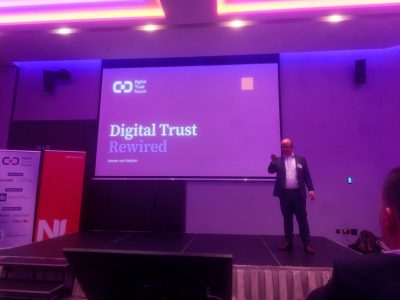
A car arrives after a few taps on an app. We step inside, even though the driver is a stranger. Why? Because we trust the invisible system behind the screen.
This deceptively simple example, shared at Digital Trust Forum 2026, captured one of the central questions of the afternoon: in a world of connected services, artificial intelligence and increasingly complex digital transactions, what — and whom — are we really trusting?
Held on 27 October 2026 at Hyatt Regency Sofia, the inaugural forum brought together technology specialists, business leaders, policymakers and investors for an unusually open and practical conversation. The event was organised by Sourcelab, in cooperation with the Dutch Bulgarian Chamber of Commerce, with the Embassy of the Kingdom of the Netherlands in Bulgaria as Founding Partner. The Hellenic Business Council in Bulgaria (HBCB) was pleased to support the initiative as an Ecosystem Partner.
From cyber threats to European competitiveness
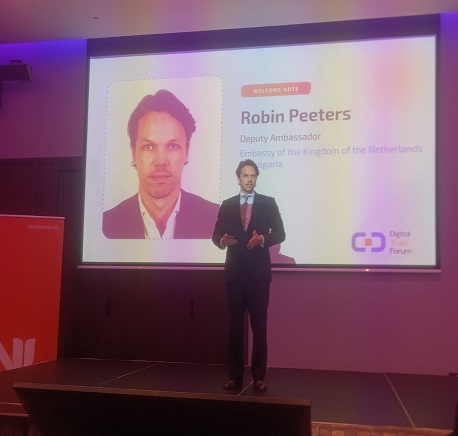
Opening the forum, Robin Peeters, Deputy Ambassador of the Kingdom of the Netherlands to Bulgaria, placed digital trust in a broader strategic context. Physical security and digital security can no longer be considered separately, he stressed. Europe’s resilience, technological independence and competitiveness increasingly depend on the systems it develops and the partners it chooses. He also highlighted the opportunity for Bulgaria to move beyond its established outsourcing role and strengthen its position as a hub for high-value innovation.
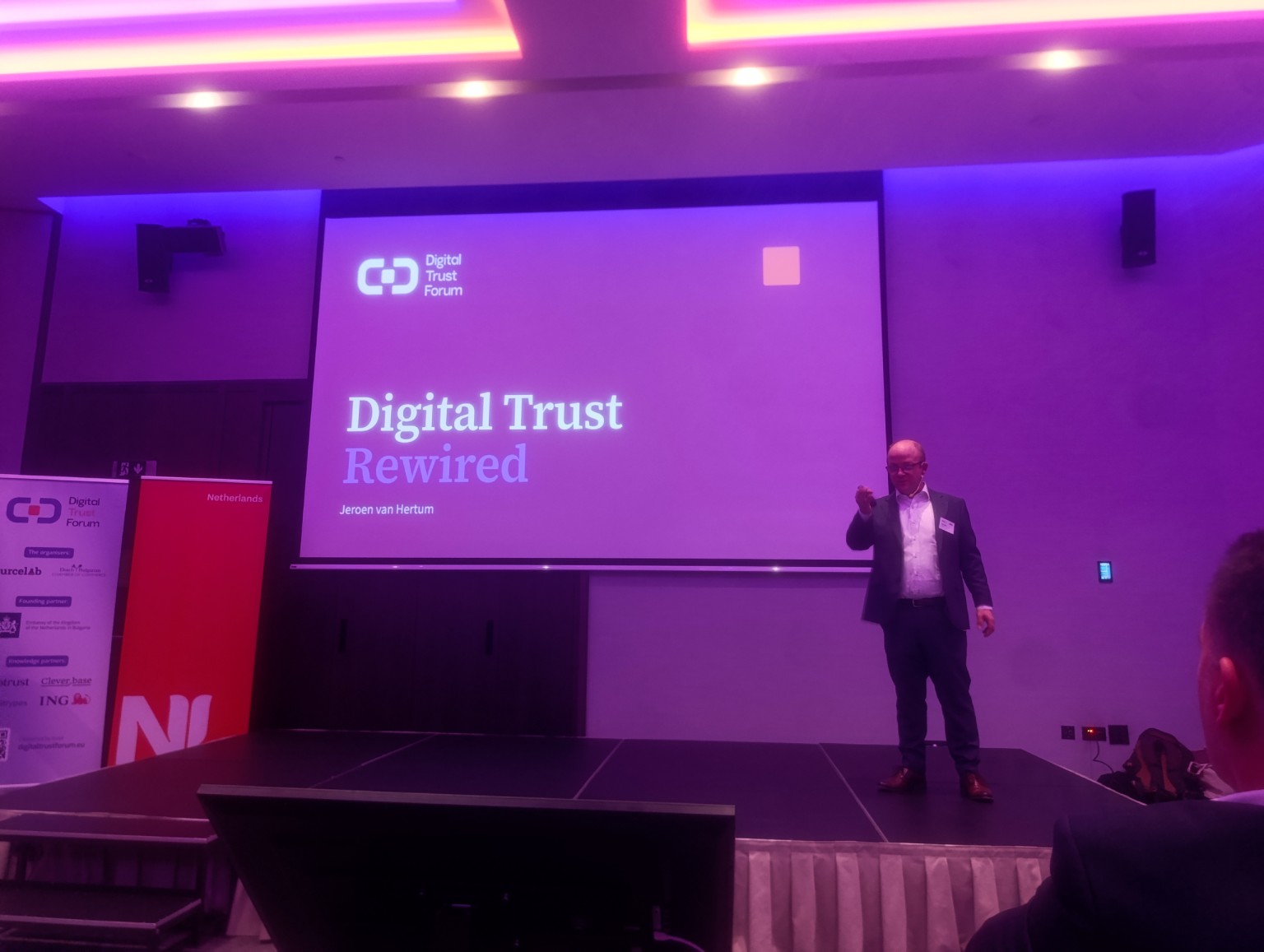
Jeroen van Hertum, founder of Sourcelab and a Board Member of the Dutch Bulgarian Chamber of Commerce, brought that challenge closer to everyday life. Our supply chains, financial services and digital platforms have become extraordinarily efficient — but their interconnectedness can also make them vulnerable. A disruption in one system can quickly affect businesses and people far beyond it. His message was clear: trust cannot be built by technology companies, regulators, banks or governments acting alone.
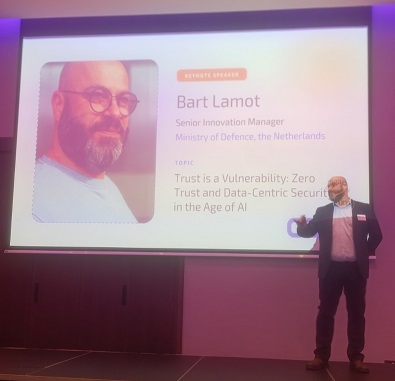
One of the most thought-provoking presentations came from Bart Lamot, Senior Innovation Manager at the Dutch Ministry of Defence. Speaking about Zero Trust and data-centric security in the age of AI, he challenged the familiar idea that granting someone access is enough. A legitimate request to view a handful of customer records during working hours is very different from an attempt to download thousands of records in the middle of the night. Modern security must continuously consider who is acting, what they are doing, which data they are using and whether the action makes sense in that particular context.
Who pressed the button?
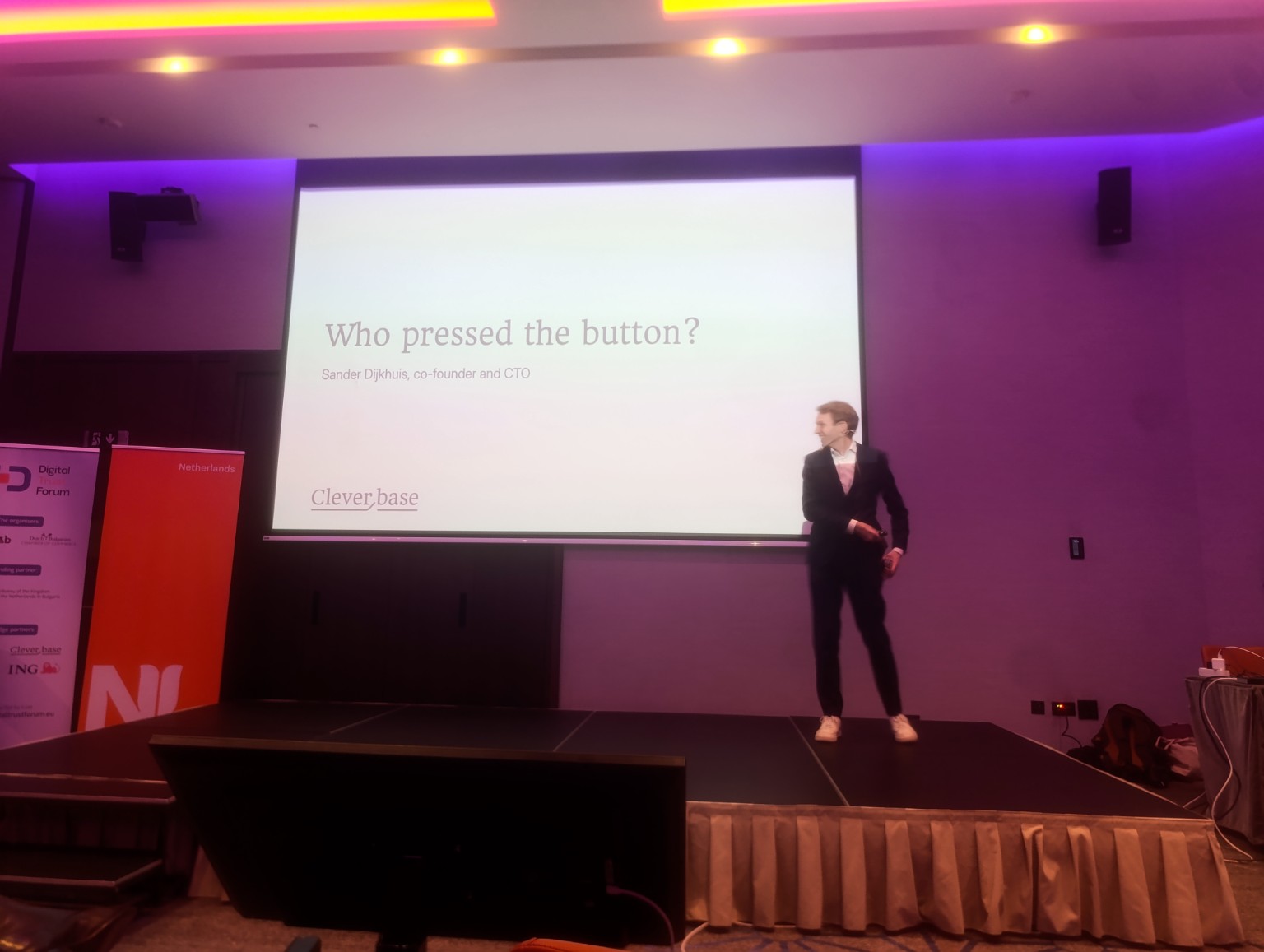
That question led naturally to the presentation by Sander Dijkhuis, CTO and Co-founder of Cleverbase, aptly titled Who Pressed the Button? Through examples of serious failures in digital systems, he illustrated the human and economic consequences of being unable to establish who authorised an action — or whether it was authorised at all. Reliable digital transactions require verifiable evidence, accountability and the ability to trace decisions, particularly as more services operate across borders.
Europe’s Digital Identity Wallet: The Next Major Shift
One of the forum’s most important forward-looking topics was the European Digital Identity Wallet, explored in detail by Prof. D.Sc. George Dimitrov, Chairman of the Board of Directors of Evrotrust.
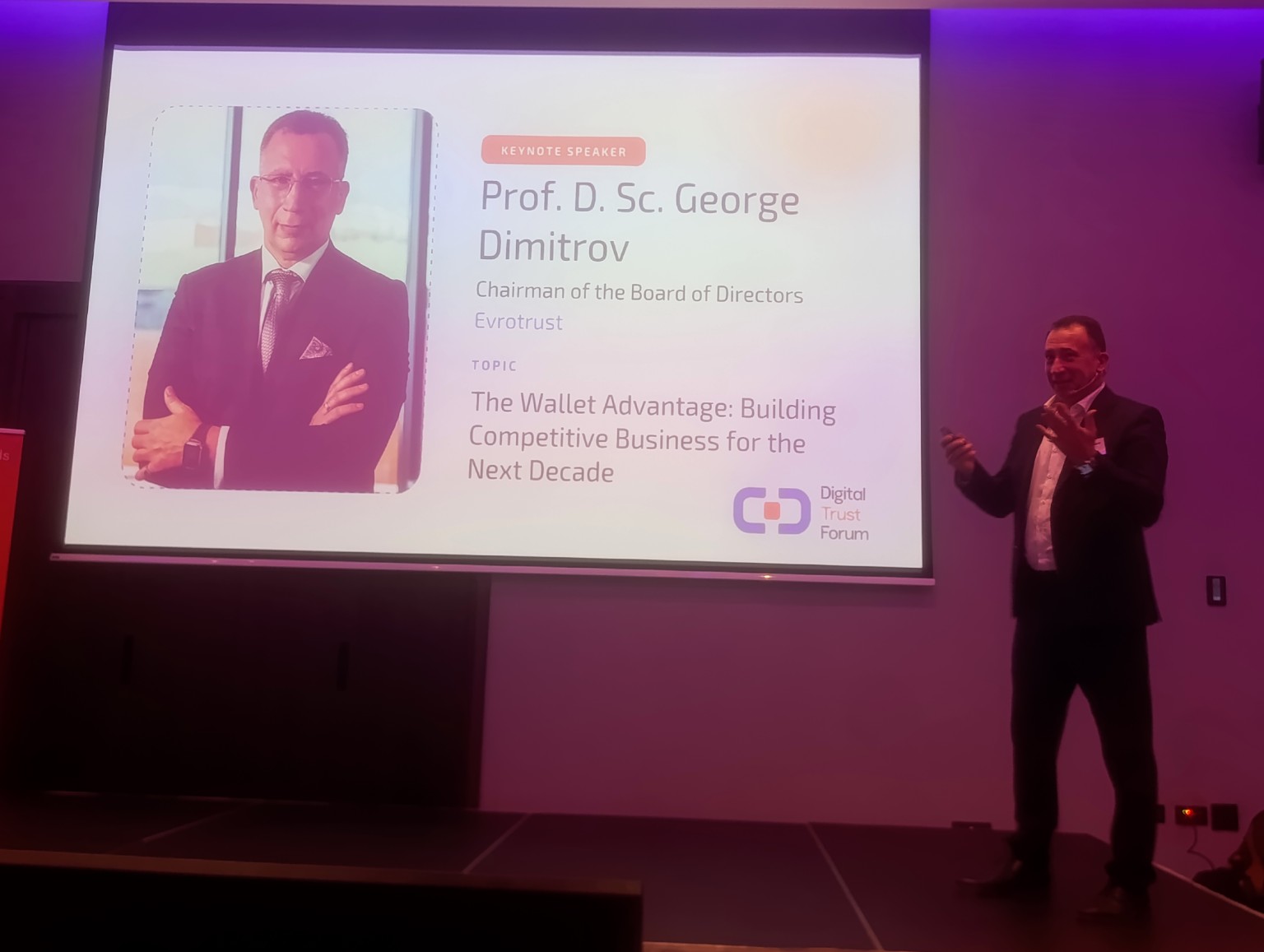
His explanation made the idea tangible: imagine the identification cards, driving licence, professional qualifications and other documents we carry today, but available in a secure digital form that can be verified and used across the EU. The wallet will make it possible to prove one’s identity, share trusted credentials and sign documents electronically — whether dealing with a bank, a business partner or a public authority in another Member State.
Crucially, using the wallet will be voluntary, and individuals will be able to decide which information to share. In some situations, for example, proving that a person meets an age requirement will not require revealing their full identity. For businesses, the possibilities range from faster customer onboarding and simpler verification to more convenient cross-border transactions and reduced administrative friction.
Prof. Dimitrov stressed that the wallet is not simply another application or compliance requirement. Together with a reliable legal framework and secure verification systems, it can become a genuine competitive advantage for companies ready to integrate it into their services. Trust must extend beyond the wallet itself to the organisations that issue and verify the credentials it contains — a concern explored further during the expert discussions.
The timing makes this especially relevant. EU Member States are expected to make digital identity wallets available by the end of 2026. In Bulgaria, the draft Law on the European Digital Identity Wallet is currently open for public consultation until 5 November 2026. Forum participants encouraged technology experts and businesses to contribute to shaping its implementation through the official government consultation.
Systems that fail safely — and leaders who take responsibility
The first panel, The Infrastructure of Trust: What It Takes to Build Systems That Cannot Fail, brought together Dr. Hristian Daskalov of Evrotrust, Sander Dijkhuis of Cleverbase, Aleks Terziev of Codelevate and Ivan Pepelov of IDVKM, moderated by Jeroen van Hertum. An especially valuable idea emerged: instead of imagining that complex systems will never fail, organisations must design them so that failures can be detected quickly, contained and corrected without bringing everything else down.
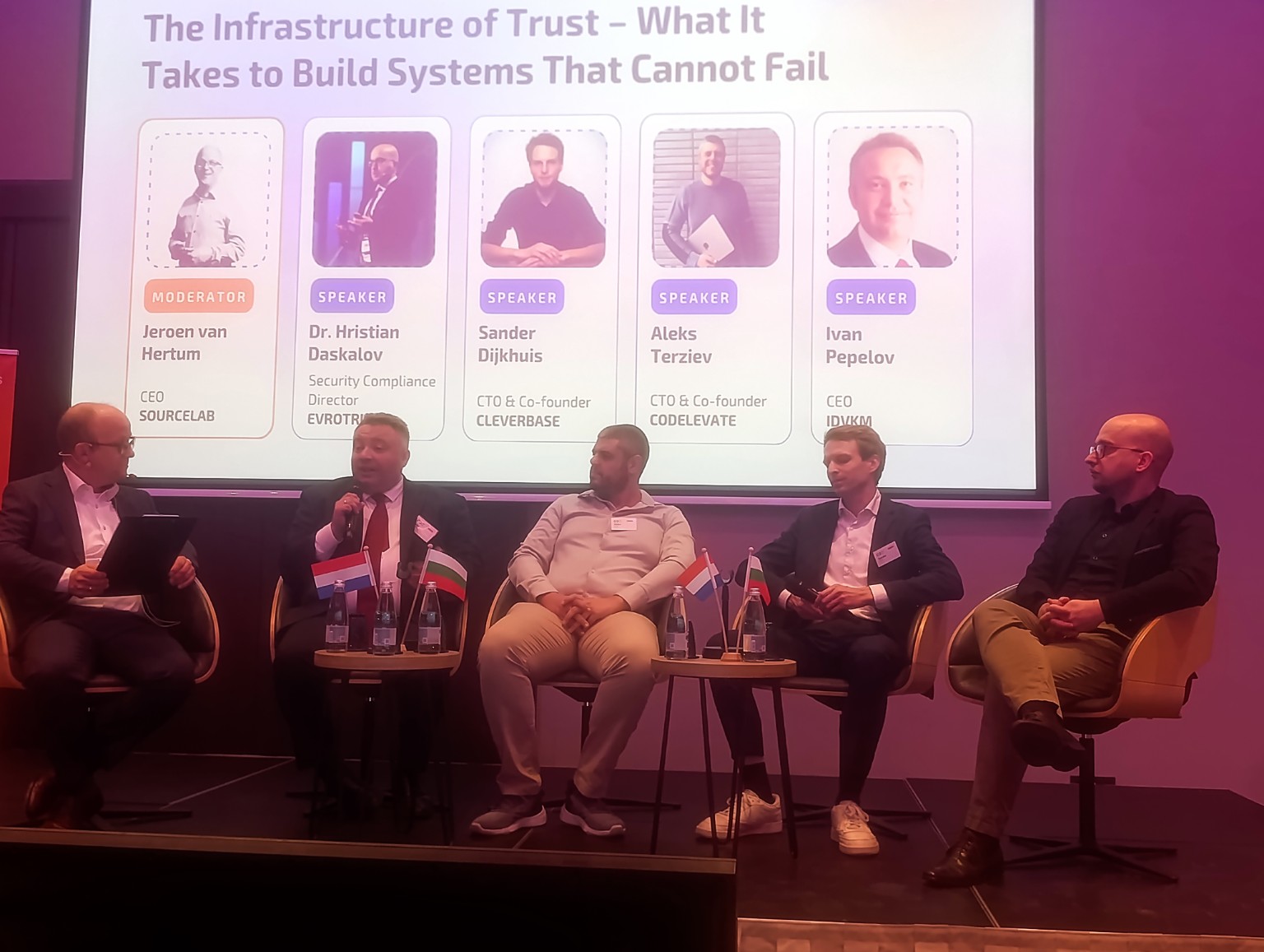
The discussion explored weak points that are easy to overlook — from excessive access rights for contractors to the security of the systems issuing and verifying digital credentials. AI agents add another layer of responsibility: just like employees, they need clearly defined permissions, monitoring and limits on what they may do.
The concluding panel shifted the focus from infrastructure to business leadership. Stephen Crombie of ING Bank described the scale of integrating new identity solutions into complex banking systems and customer journeys. Alexander Nakov of ICT Strypes addressed the growing security challenges facing organisations and the importance of building on resilient systems. Max Gurvits of Vitosha Ventures offered a particularly sharp business perspective: when digital trust is treated only as a compliance expense, it remains a cost; when companies see it as part of business development, it can become a source of value and competitive advantage.
The conversation also looked ahead to a world in which AI agents will increasingly interact with companies and digital services on behalf of people — making questions of identity, permission and accountability even more urgent.
For HBCB, supporting Digital Trust Forum 2026 reflects a commitment to meaningful cross-border cooperation and to bringing useful expertise into the wider business community. The strongest takeaway from the day was not a single technology or regulation. It was the recognition that digital trust is an essential part of how modern businesses operate, grow and earn confidence — and that building it is a shared responsibility.