Bulgaria’s entry into the Eurozone marks an important economic milestone. But how can the country turn the opportunities created by the single currency into lasting investment, stronger businesses and sustainable growth?
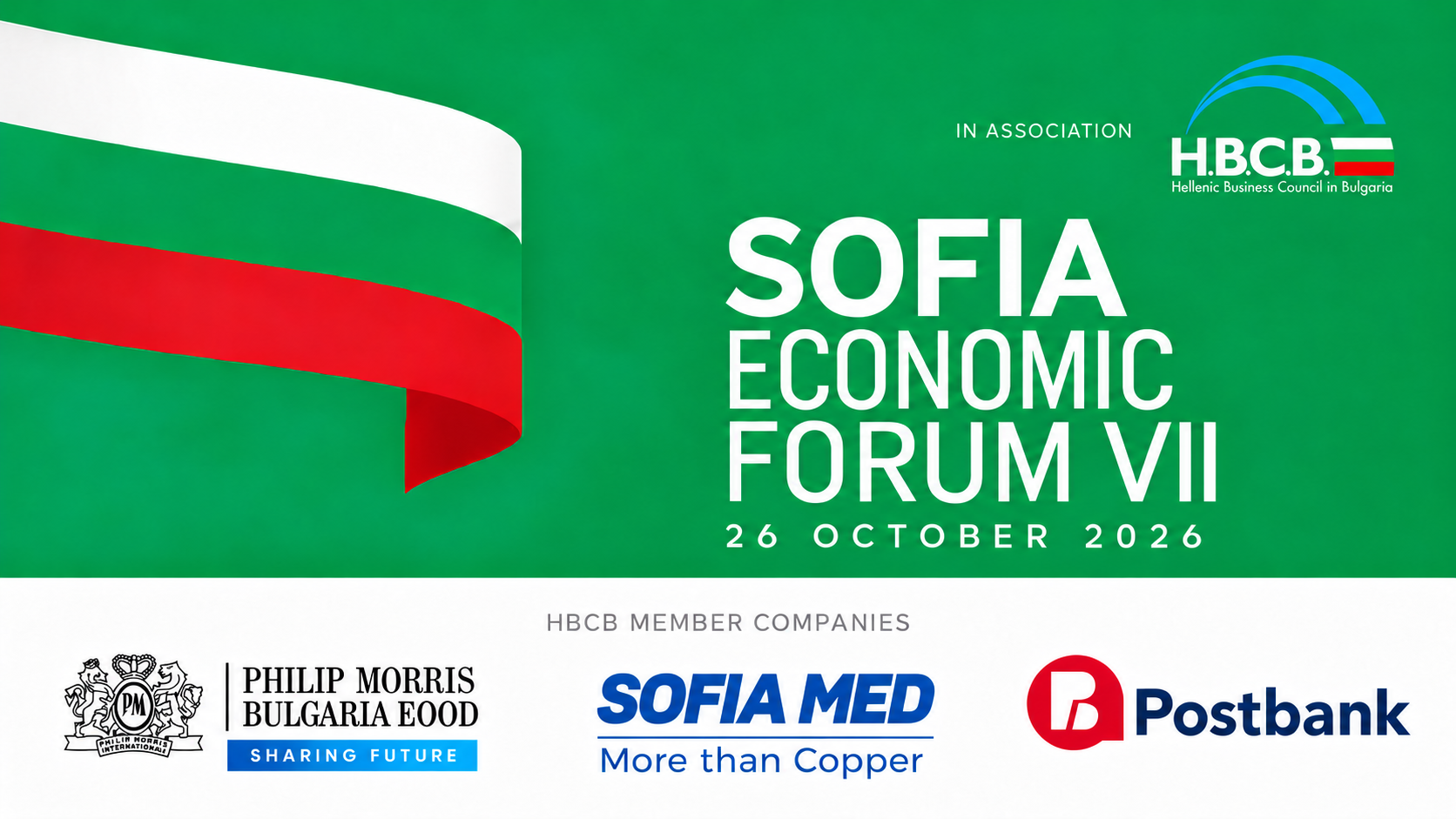
This was the central question explored during the panel “The First Year of the Euro in Bulgaria: Early Impacts and Future Prospects” at Sofia Economic Forum VII, held on 26 October 2026 at Sofia Balkan Palace.
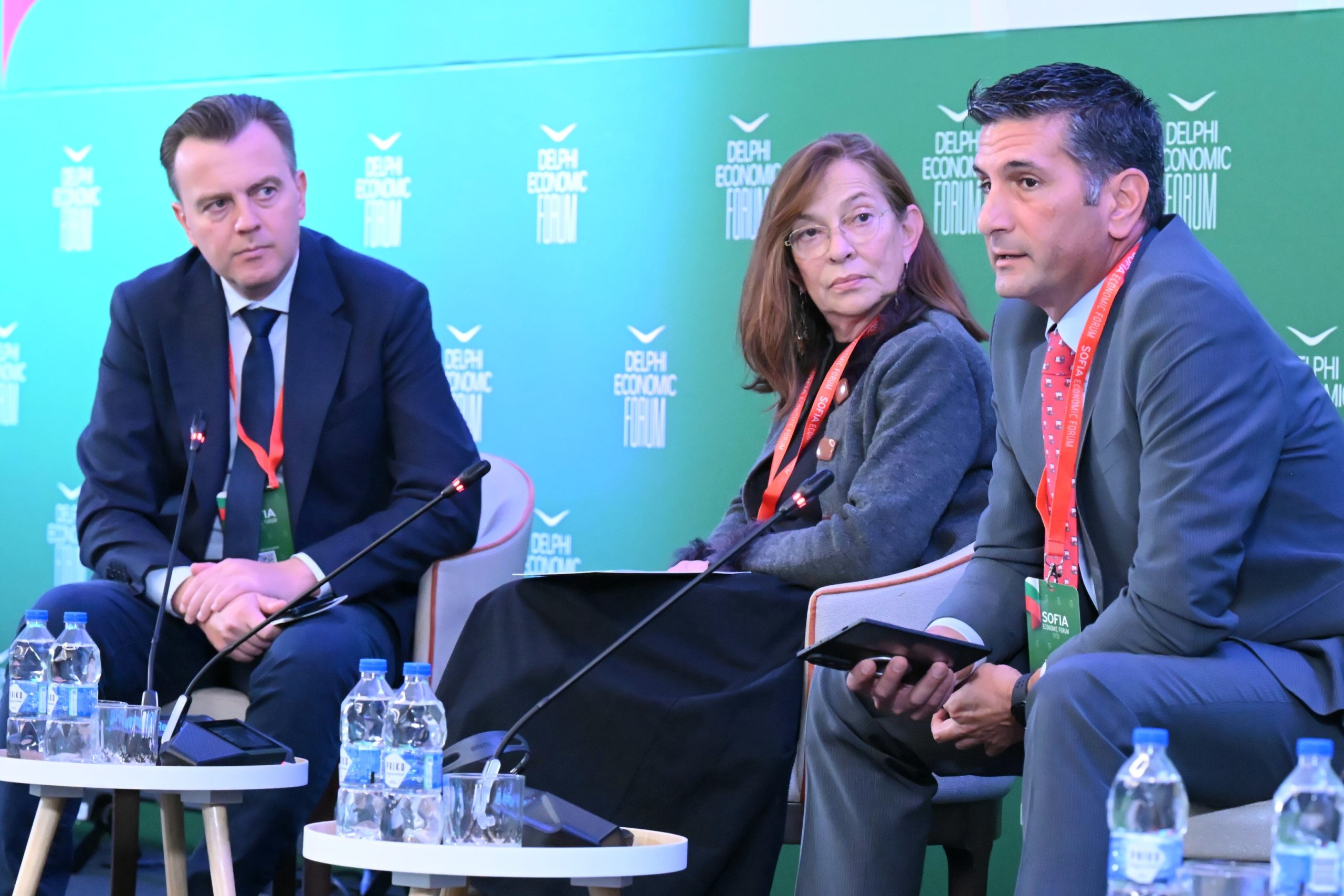
Mr. Panagiotis Mavridis, Chairman of the Hellenic Business Council in Bulgaria (HBCB) and Chief Operating Officer and Member of the Management Board of Eurobank Bulgaria (Postbank), joined the discussion alongside H.E. Irene Maria Plank, Ambassador of the Federal Republic of Germany to Bulgaria. The panel was moderated by Mr. Petar Ganev, Senior Research Fellow at the Institute for Market Economics.
The Eurozone: New Opportunities for Bulgaria’s Economy
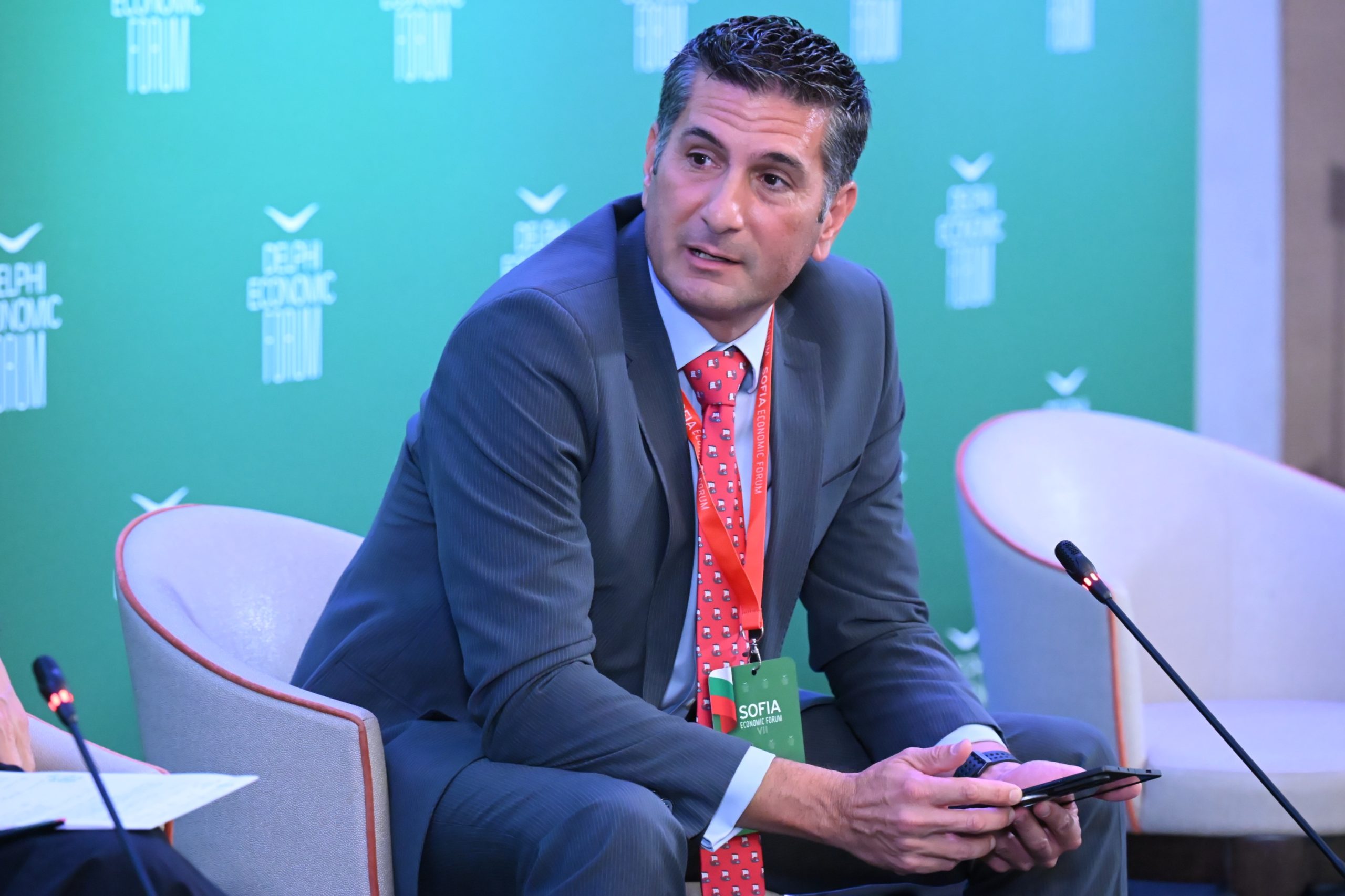
Reflecting on the first months following Bulgaria’s adoption of the euro, Mr. Mavridis highlighted the successful transition carried out by the country’s banking sector.
The change required extensive preparation, including the conversion of bank accounts, payment systems and financial operations. Despite its considerable technical complexity, the transition was completed smoothly, allowing businesses and individuals to continue their everyday activities with minimal disruption.
Beyond the operational achievement, Eurozone membership has brought important changes to Bulgaria’s financial environment.
One of the most significant developments has been the reduction of mandatory minimum reserve requirements for banks from 12% to 1%, releasing billions of euros in additional liquidity.
Mr. Mavridis emphasised that the real economic opportunity lies in how these newly available financial resources are used.
While mortgage lending has demonstrated strong growth, financing for businesses has been expanding at a more moderate pace. Directing more capital towards productive economic activities could generate wider and more sustainable benefits.
In this context, he stressed the need for greater investment in infrastructure, logistics and business development, supported by a stronger pipeline of well-prepared projects capable of attracting financing.
The availability of capital alone is not sufficient. Bulgaria must also create the conditions and identify the projects that can transform financial resources into economic growth.
Attracting Investment Requires More Than Financial Stability
The discussion also addressed Bulgaria’s attractiveness to international investors.
Eurozone membership reduces currency-related uncertainty, simplifies cross-border transactions and strengthens the country’s integration into the European financial system. These advantages can reinforce investor confidence and improve access to financing.
However, the speakers agreed that the long-term benefits will depend on the policies and decisions that follow.
Efficient institutions, predictable regulations, a well-functioning judicial system and streamlined investment procedures remain essential for attracting new capital.
Particular attention was also given to the importance of companies already operating in Bulgaria. Encouraging established investors to expand their activities can be just as valuable as attracting entirely new businesses.
The discussion further explored opportunities for economic diversification, including advanced technologies, artificial intelligence, renewable energy and higher-value industries.
H.E. Ambassador Plank highlighted the importance of Bulgaria’s deeper European integration and the potential for further development of its economic relationship with Germany, one of the country’s leading trade and investment partners.
HBCB Member Companies Among the Forum’s Sponsors
The Hellenic Business Council in Bulgaria was pleased to see several of its member companies actively supporting Sofia Economic Forum VII.
Philip Morris Bulgaria, Sofia Med and Postbank were among the sponsors and supporters of Sofia Economic Forum VII.
Their contribution reflects the important role of the private sector in supporting initiatives that encourage economic dialogue, international cooperation and investment.
HBCB also participated in the Forum as an In Association organisation, continuing its long-standing cooperation with the Delphi Economic Forum, a valued partnership dedicated to fostering dialogue, strengthening business ties and supporting economic cooperation.
From Economic Potential to Practical Action
The issues raised during the discussion are closely connected to HBCB’s ongoing work to improve Bulgaria’s business and investment environment.
On 15 October 2026, the Council submitted eight concrete proposals to the Bulgarian government, addressing administrative efficiency, regulatory predictability and practical measures to encourage investment.
These priorities are particularly relevant as Bulgaria enters a new stage of its economic development within the Eurozone.
The adoption of the euro has created new possibilities. Turning them into tangible economic progress will require investment, effective institutions and continued cooperation between businesses and policymakers.
Through its participation in Sofia Economic Forum VII, HBCB contributed to this important discussion, bringing forward the experience and perspective of the business community.
The Council extends its appreciation to the Delphi Economic Forum for organising the event and providing a valuable platform for dialogue on Bulgaria’s economic future.